

Find the right finish for your range
Detailed prints, robust imprints or elegant embroidery - at Shirtigo you will find the right finish for your products and your business. 100% sustainably produced in our own production facility in Germany.
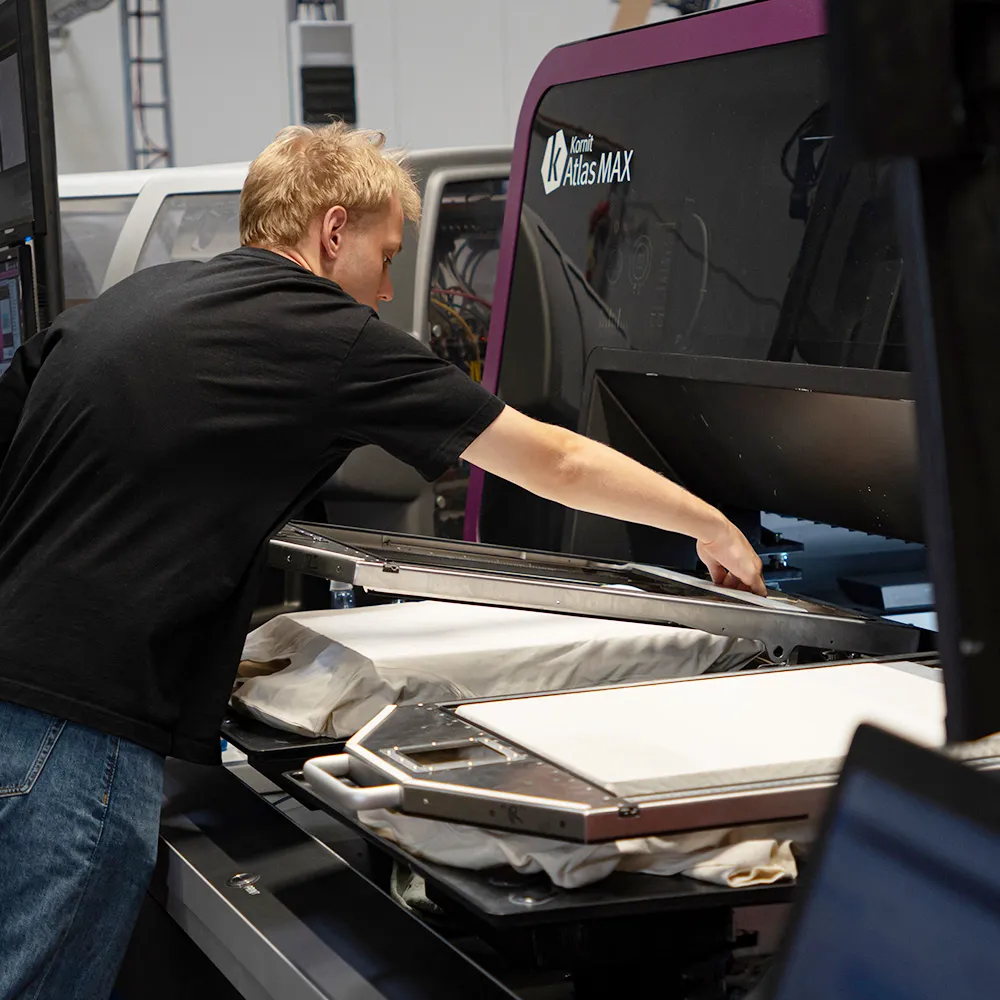
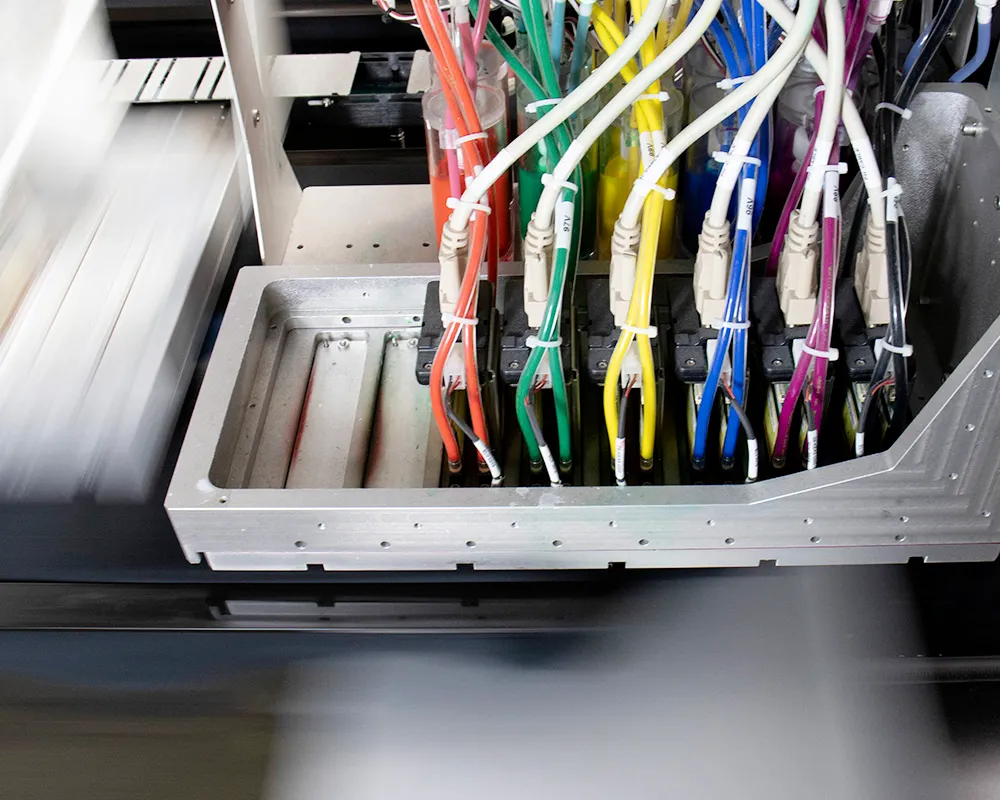
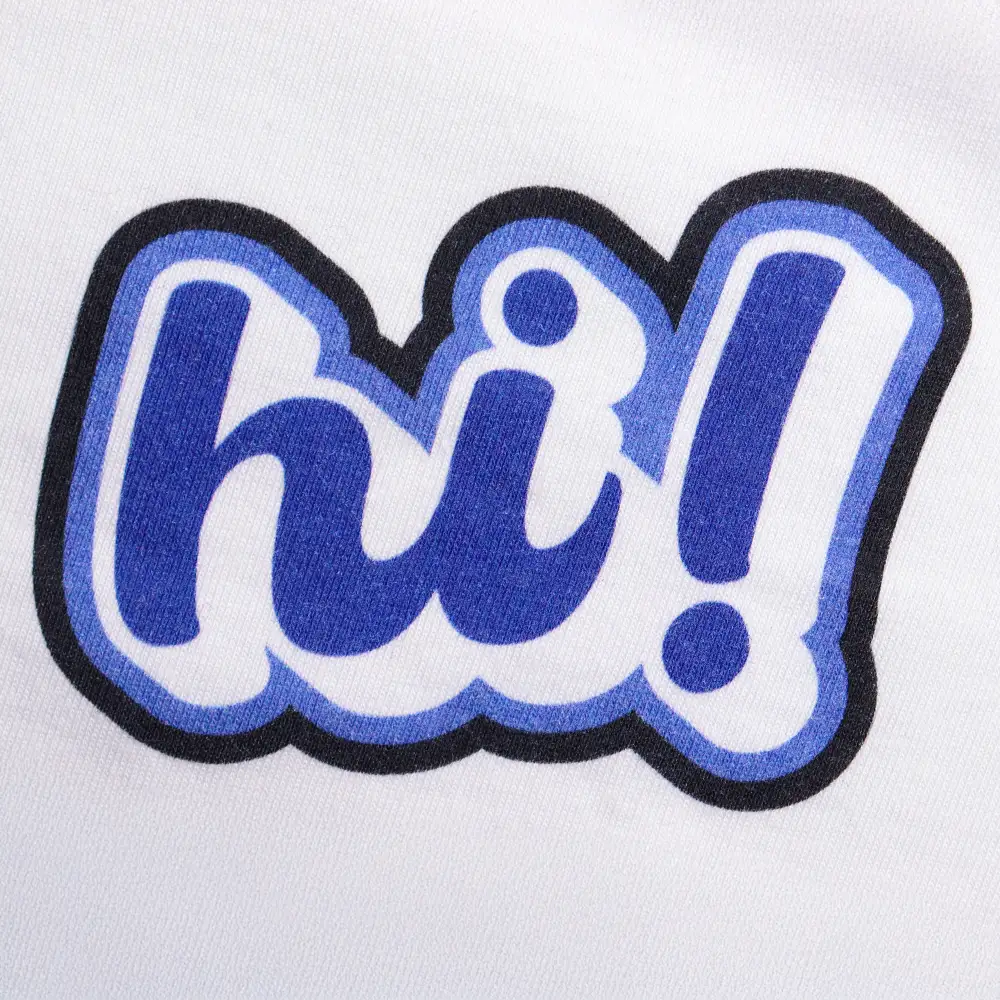
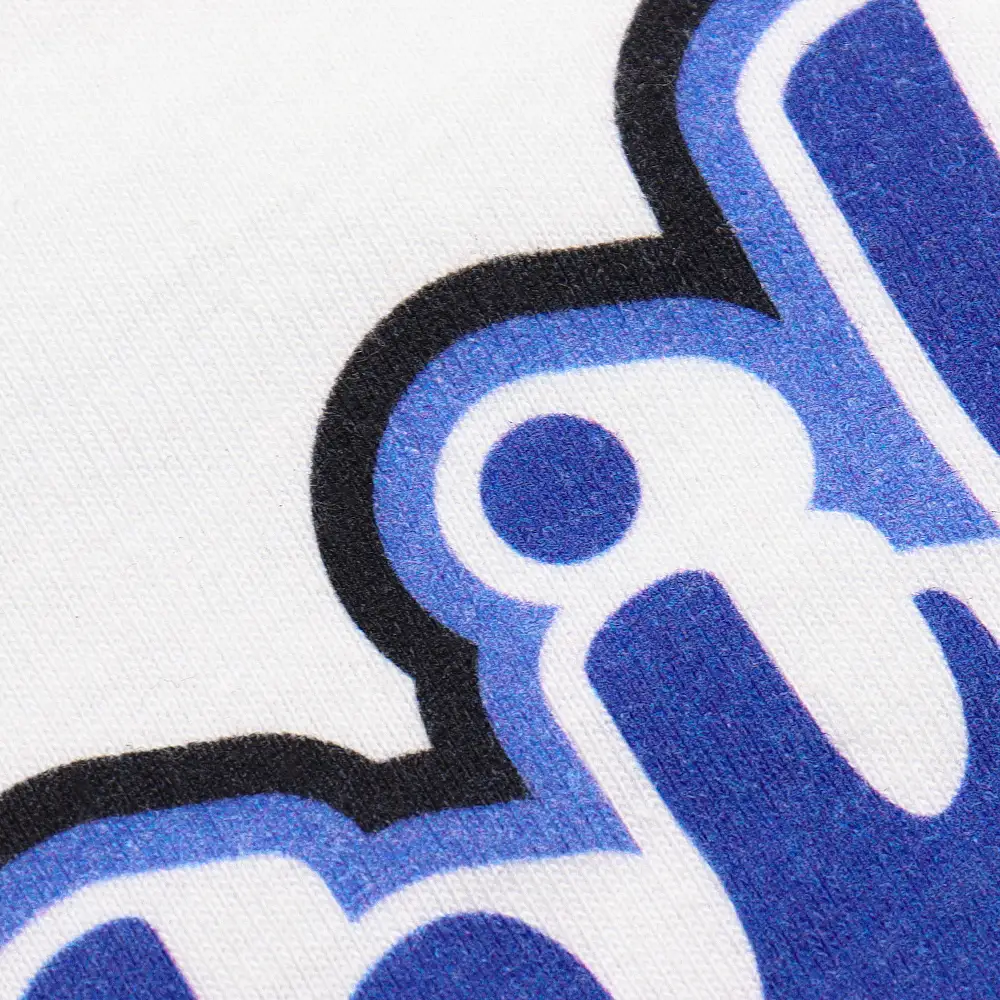
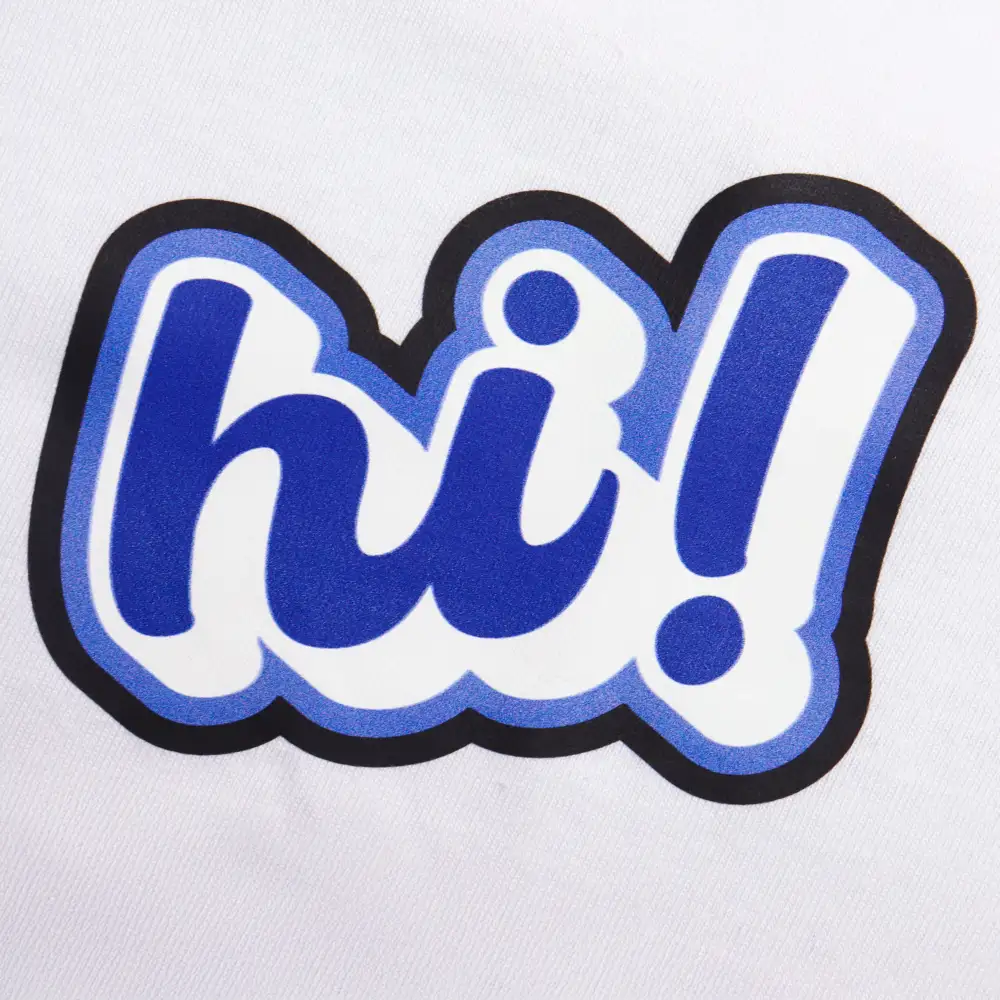
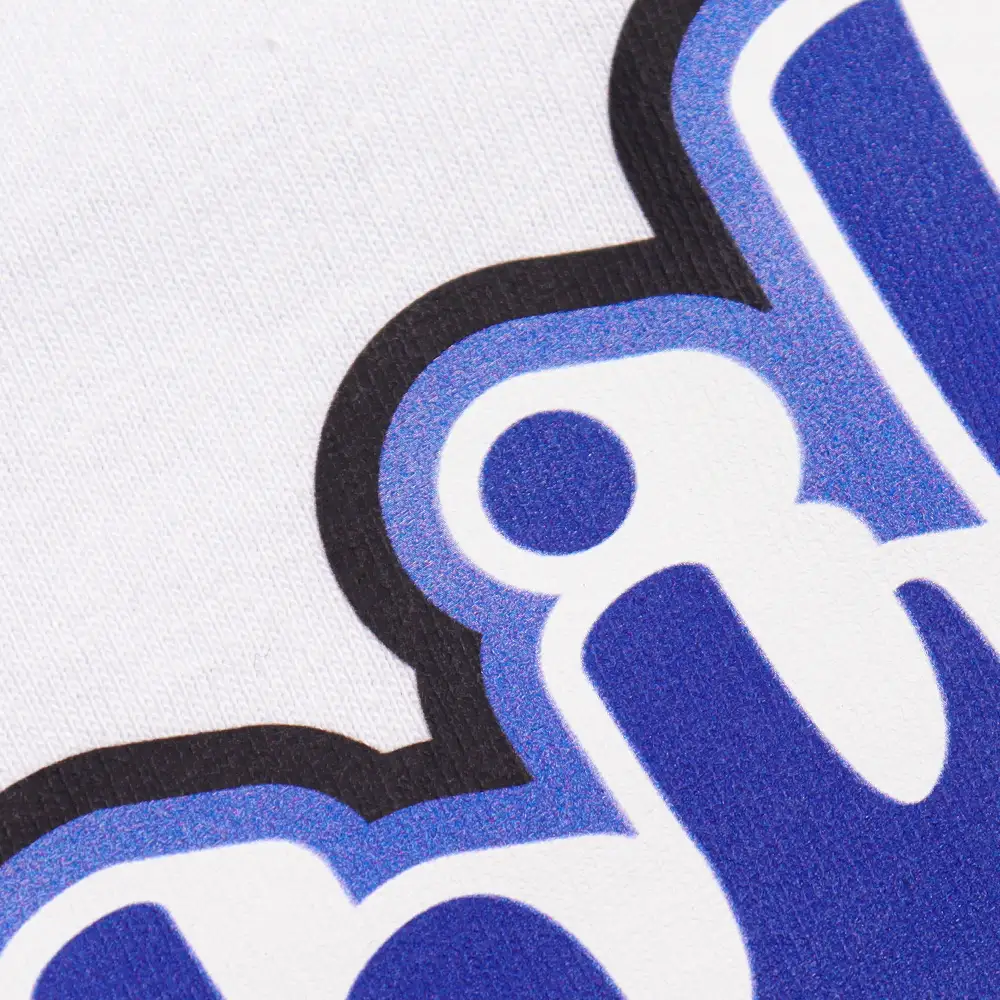
DTG (Direct-to-Garment)
DTG (Direct-to-Garment) is a modern printing process in which the motif is applied directly to the textile - similar to an inkjet printer, only for clothing. It is particularly suitable for detailed, colorful and photorealistic designs. The direct print creates a soft feel that is comfortable to wear.
- Vibrant colors & finest details
- Pleasant feel, as it is printed directly onto the fabric
DTF (Direct-to-Film)
DTF (Direct-to-Film) is a flexible printing process in which the motif is first printed on a special film and then transferred to the textile. This means that almost all materials can be printed - even difficult ones such as polyester. DTF printing is very robust, durable and retains its color intensity even after many washes.
- Universally applicable, even on difficult fabrics
- Very durable and wash-resistant

Embroidery
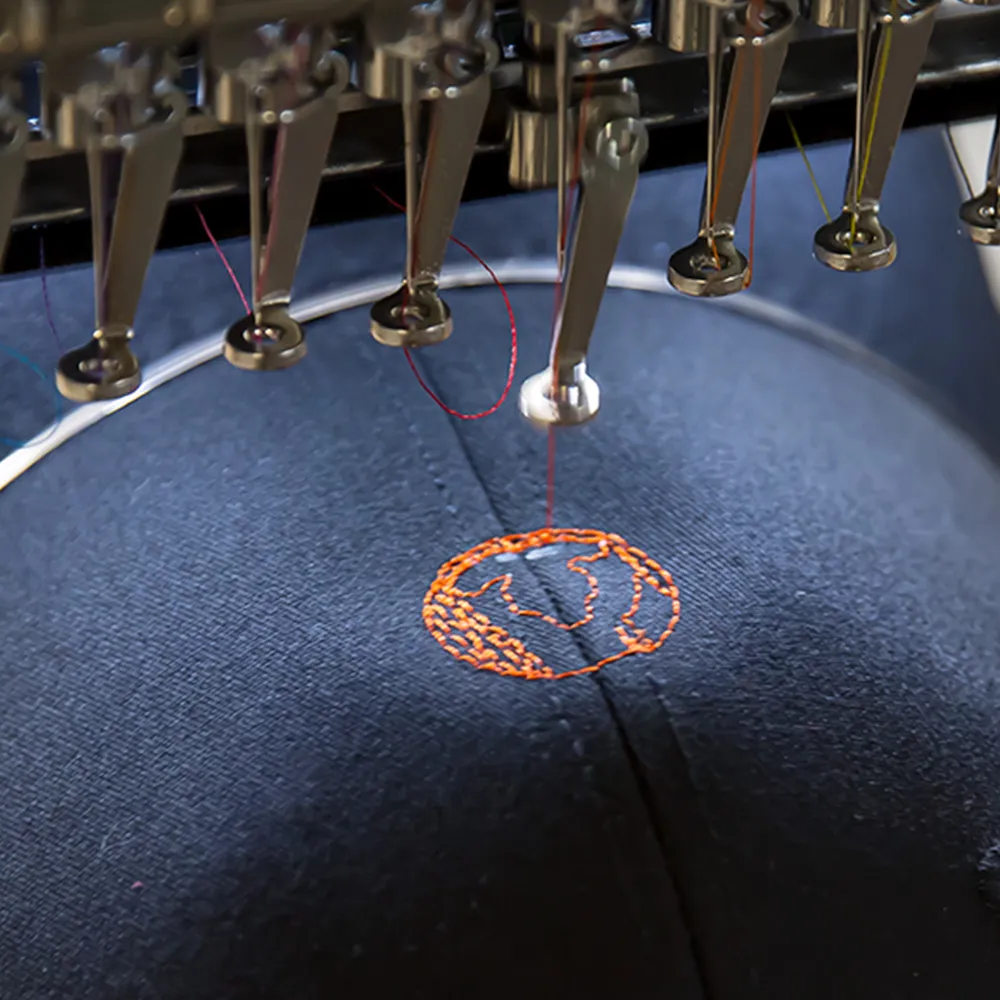
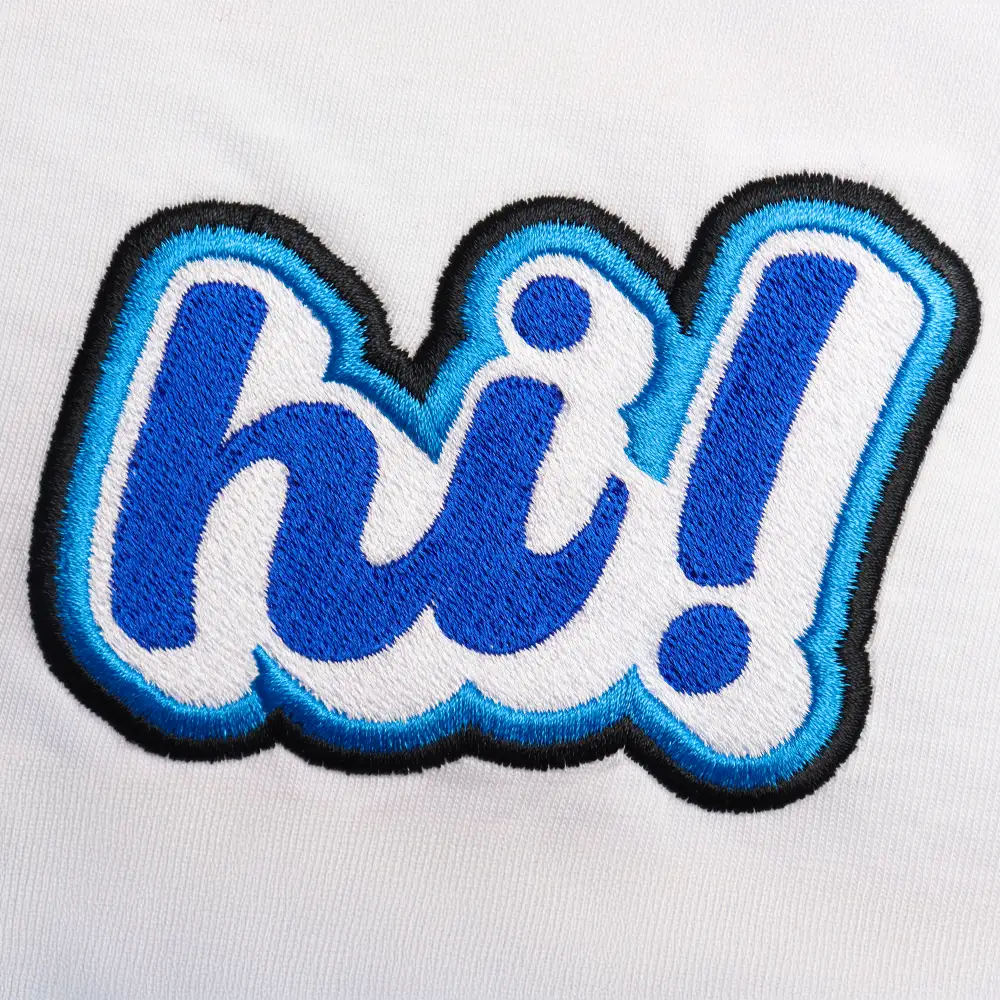
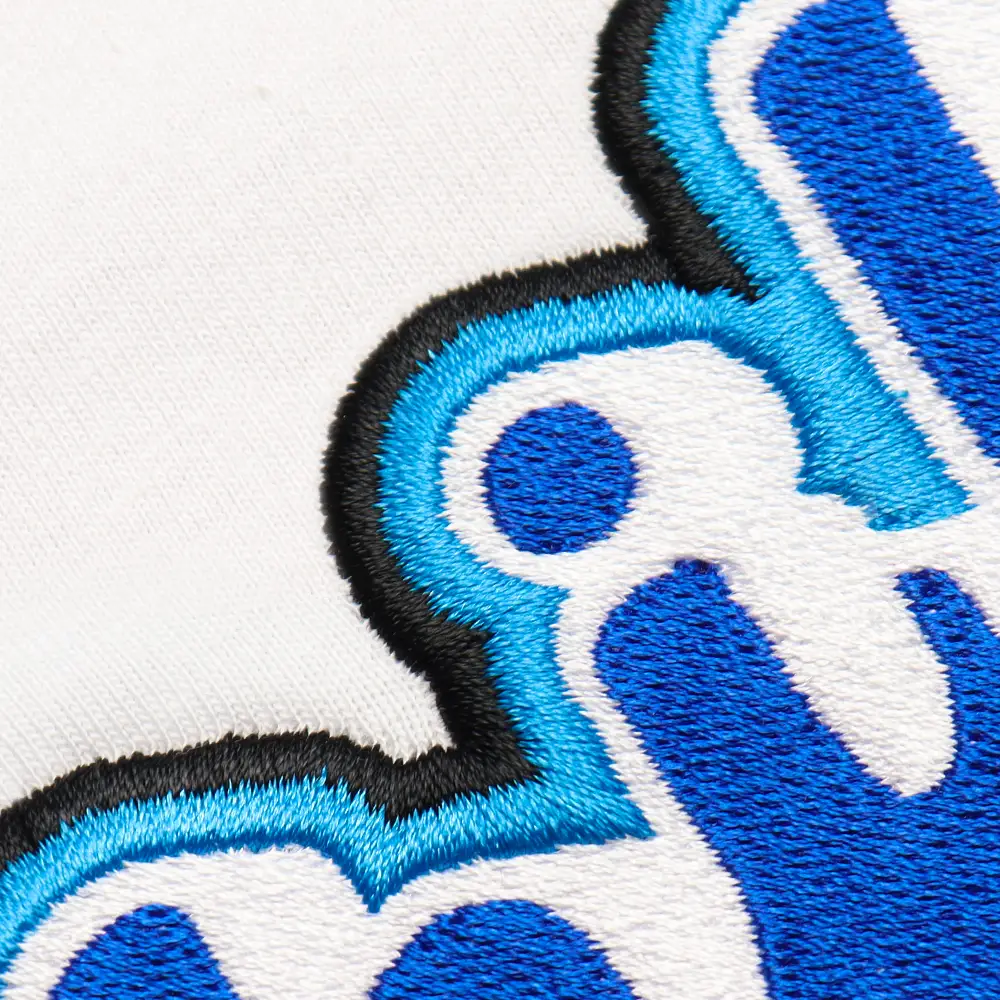
Embroidery is the noblest form of textile finishing. The design is embroidered directly into the fabric using high-quality thread. The result is not only visually particularly high-quality, but also extremely durable and resistant. Embroidery is ideal for logos, lettering or motifs with clear shapes.
- Premium look and feel
- Very robust and durable
A comparison of our finishing processes
DTG |
Transferdruck (DTF) |
Stick |
|
|---|---|---|---|
Detailed motifs |
|||
Color gradients/photos |
|||
Large areas |
* |
||
Logos & lettering |
|||
Fine lines/details |
|||
Many materials |
|||
Sustainability |
Why you should choose Shirtigo

Local production in DE
All items are produced in our in-house print shop, with the utmost care and short delivery routes.

Precise production
You only pay when an order is placed. We produce from 1 piece, so there are no storage costs for you.

First-class support
Our first-class customer service and in-house IT support are available in German and English to answer any questions you may have.

Short production times
We process orders within 2-5 working days and ship worldwide directly to your customers.

Sustainable brand development
The environment is important to us! We attach great importance to resource-conserving and sustainable production.

Warehousing & Branding
Use our warehousing and branding services to further scale your brand.
Frequently asked questions
Which printing method suits my motif?
Which textile printing method is optimal for you depends on various factors: How many colors does your design have? Are there many small details? And which material should be refined?
At Shirtigo, we offer three high-quality methods for textiles as standard, perfectly tailored to different requirements:
- DTG (Direct-to-Garment): This method is ideal for detailed, colorful designs and photos on cotton. A major advantage: It is realizable from a quantity of 1.
- DTF (Direct-to-Film): Particularly suitable for blended fabrics, polyester, or more challenging textiles. DTF provides extremely vivid colors, sharp edges, and a noticeable texture of the design.
- Embroidery: Perfect for noble, durable, and three-dimensional refinements. Especially suitable for logos on polo shirts, hoodies, or caps. Less suitable for very fine color gradients or photorealistic designs.
???? Tip for textiles: For color-intensive designs and complex patterns, you are always on the safe side with DTG or DTF.
Note on other products (e.g. mugs): For non-textile items like mugs, we use sublimation printing. Since this method is firmly linked to the respective product, you do not have to choose between printing methods yourself – we automatically adjust it to suit your product.
In this article, you can familiarize yourself more intensively with our various refinement techniques.
Why should I choose DTG?
DTG printed directly on the textile allows for a soft feel, very good wash resistance, and fine details – especially for cotton textiles. If your motif, for example, contains a photo template, many color gradients, or textures and you are printing on cotton, DTG is a very good choice.
When does DTF pay off compared to DTG?
DTF is particularly suitable when you want to print on mixed fabrics, polyester, or "difficult" materials, or when your design has strong colors with clear edges. If your design has many colors and the fabric is not classic 100% cotton, DTF may be the better option.
When is embroidery suitable?
Stick is particularly suitable for durable, high-quality textiles such as workwear, team sportswear, or promotional items that are frequently washed. It is ideal for clear, classic logos and designs where a valuable 3D effect is desired.
What does choosing the wrong procedure cost me?
If you choose the wrong process, it can mean: higher unit prices, poorer quality (e.g. colors appear dull, less hold), or in the worst case, an unsuitable result for your material or design.
Can I switch my motif to another method later?
Yes, but it depends on the method. At Shirtigo, you can switch between textile printing methods very flexibly; however, there are restrictions with embroidery:
- Switching between DTG and DTF: Switching between the two printing methods DTG and DTF is generally problem-free possible. For example, if you print a detailed design on cotton first using DTG, you can later flexibly switch to DTF if you want to place the same design on blended fabrics or polyester.
- Switching from/to embroidery: Switching from one printing method (DTG/DTF) to embroidery – or vice versa – is currently not straightforwardly possible. The embroidery method has entirely different, specific requirements for the file than the classic printing. To embroider a design, the file must first be converted (punched) into a so-called embroidery file in a separate, elaborate process and prepared. Therefore, automated conversion is currently not directly feasible.
Important: Please note that the file requirements can vary depending on the finishing type. While switching between DTG and DTF usually does not require significant changes, the embroidery method always requires a separate review and preparation of your design.